| Convenor | Minchul KIM |
| When | Sep – Dec, 2022 |
| Where | 31402, Sungkyunkwan University |
| What | All members of the Postgraduate Committee and students from universities across Seoul attended this founding seminar of the GIHU in which a lively discussion of a selection of seminal papers on intellectual history took place. |
| Participants | Soojin HYUN Sangyeon KIM Seonhae KIM Jongwon LEE Woochang LEE Kyungyul PARK Zevan PARK Harim YANG Woochang YANG |
Reading List
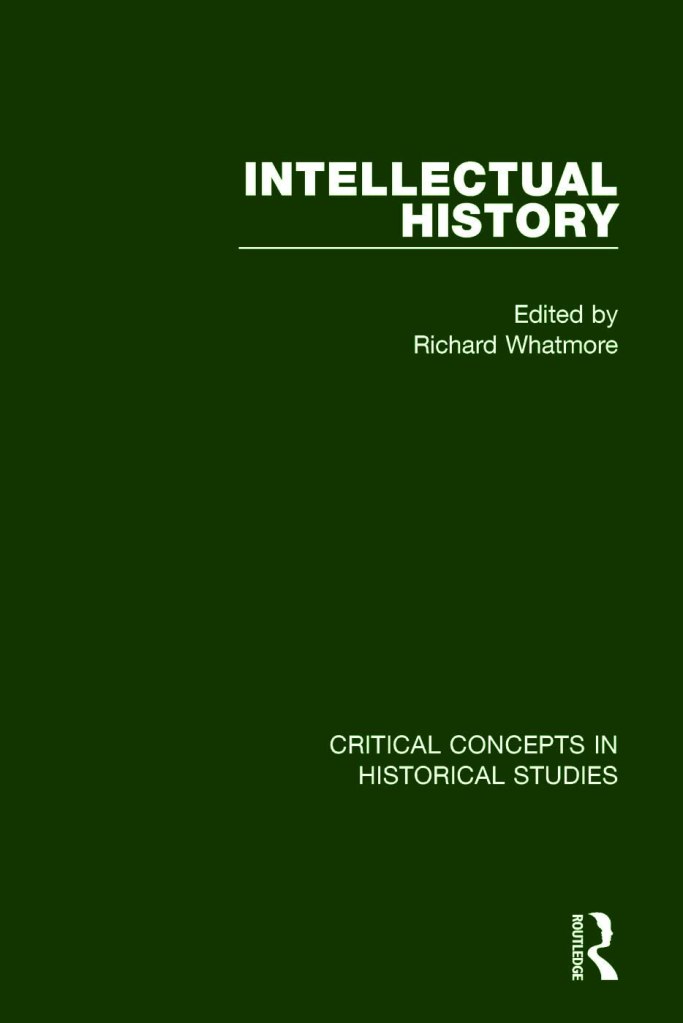
- Richard Whatmore, 지성사란 무엇인가 : 역사가가 텍스트를 읽는 방법, 이우창 역 (오월의 봄, 2020).
- 안두환, “케임브리지 학파의 지성사와 역사주의 정치학,” 한국정치학회보, 55:1 (2021), pp. 57-81.
- Quentin Skinner, “Meaning and Understanding in the History of Ideas,” History and Theory, 8:1 (1969), pp. 3-53.
- Dominick LaCapra, “Rethinking Intellectual History and Reading Texts,” History and Theory, 19:3 (1980), pp. 245-276.
- Quentin Skinner, “History and Ideology in the English Revolution,” The Historical Journal, 8:2 (1965), pp. 151-178.
- J. G. A. Pocock, “From The Ancient Constitution to Barbarism and Religion: The Machiavellian Moment, the History of Political Thought and the History of Historiography,” History of European Ideas, 43:2 (2017), pp. 129-146.
- J. G. A. Pocock, “Historiography as a Form of Political Thought,” History of European Ideas, 37:1 (2011), pp. 1-6.
- Samuel James, “J. G. A. Pocock and the Idea of the ‘Cambridge School’ in the History of Political Thought,” History of European Ideas, 45:1 (2019), pp. 83-98.
- J. G. A. Pocock, “A Response to Samuel James’s ‘J. G. A. Pocock and the Idea of the “Cambridge School” in the History of Political Thought,’” History of European Ideas, 45:1 (2019), pp. 99-103.
- Mark Bevir, “The Errors of Linguistic Contextualism,” History and Theory, 31:3 (1992), pp. 276-298.
- Colin Kidd, “Lord Dacre and the Politics of the Scottish Enlightenment,” The Scottish Historical Review, 84:218, Part 2 (2005), pp. 202-220.
- William Ferguson, “A Reply to Professor Colin Kidd on Lord Dacre’s Contribution to the Study of Scottish History and the Scottish Enlightenment,” The Scottish Historical Review, 86:221, Part 1 (2007), pp. 96-107.
- Colin Kidd, “On Heroes, Hero-Worship and Demonology in Scottish Historiography: A Reply to Dr. Ferguson,” The Scottish Historical Review, 86:221, Part 1 (2007), pp. 108-112.
- Samuel Moyn and Andrew Sartori, “Approaches to Global Intellectual History,” in Samuel Moyn and Andrew Sartori (eds.), Global Intellectual History (New York: Columbia University Press, 2013), pp. 3-30.
- Samuel Moyn, “On the Nonglobalization of Ideas,” in Samuel Moyn and Andrew Sartori (eds.), Global Intellectual History (New York: Columbia University Press, 2013), pp. 187-204.
- William Selinger, “The Battle over Burke,” Modern Intellectual History, 18:4 (2021), pp. 1178-1189.
- R. Burr Litchfield, “Franco Venturi’s ‘Crisis’ of the Old Regime,” Journal of Modern Italian Studies, 10:2 (2005), pp. 234-244.
- Lina Weber, “National Debt and Political Allegiance in Eighteenth-Century Britain,” The Historical Journal, 65:4 (2022), pp. 1015-1034.
- Arnaldo Momigliano, “Ancient History and the Antiquarian,” Journal of the Warburg and Courtauld Institutes, 13:3/4 (1950), pp. 285-315.
- Mark Salber Phillips, “Reconsiderations on History and Antiquarianism: Arnaldo Momigliano and the Historiography of Eighteenth-Century Britain,” Journal of the History of Ideas, 57:2 (1996), pp. 297-316.
- Dmitri Levitin, The Kingdom of Darkness: Bayle, Newton, and the Emancipation of the European Mind from Philosophy (Cambridge: Cambridge University Press, 2022), pp. 819-852: “Conclusion.”
- Christopher Brooke, “Eighteenth-Century Carthage,” in Béla Kapossy, Isaac Nakhimovsky, and Richard Whatmore (eds.), Commerce and Peace in the Enlightenment (Cambridge: Cambridge University Press, 2017), pp. 110-124.
- Marisa Linton, “The Man of Virtue: The Role of Antiquity in the Political Trajectory of L. A. Saint-Just,” French History, 24:3 (2010), pp. 393-419.
- Iain McDaniel, “Philosophical History and the Science of Man in Scotland: Adam Ferguson’s Response to Rousseau,” Modern Intellectual History, 10:3 (2013), pp. 543-568.
- Richard Whatmore, “Adam Smith’s Role in the French Revolution,” Past & Present, 175, (2002), pp. 65-89.
 Global Intellectual History Unit